
A fence rarely goes from straight to failing overnight. It starts with a slight tilt at a corner, a gate that scrapes the driveway, or a run that no longer lines up with the neighbor’s section. Leaning fence repair is the work of finding why the posts moved—and fixing that cause—before the whole line has to come down.
My Texas Fence sees this most after wet winters, clay-soil heave, and wind events that push privacy panels like a sail. If you want a crew to walk the line with you, call (469) 972-6744 or use the contact page. Below is how to diagnose the lean, what you can reasonably repair, and when replacement is the cleaner path.
Table of contents
- Why fences start to lean
- How to check posts, rails, and hardware
- What failing posts look like up close
- Leaning fence repair options that actually last
- Clay soil, water, and post depth
- What not to try with a bottle jack
- FAQ
Why fences start to lean
Posts are the structure. Panels and pickets are just the skin. When a line leans, the post has usually lost its grip in the ground, the concrete collar has cracked, or rot has eaten the wood right at grade—the wettest, warmest spot on the whole fence.
North Texas clay expands when it drinks water and shrinks when it dries. That seasonal movement works posts like a slow pump. Add a tall privacy fence, and you have a large surface catching wind. A post that was set shallow, or set in a skinny hole with little concrete, will eventually rotate. That is the core of most leaning fence repair calls: not a “crooked board,” but a foundation problem.
Other common causes:
- Downspouts or poor yard grade dumping water along the fence line
- A gate that is too heavy for the hinge post
- Stringers pulling away from posts after fasteners rust
- A vehicle bump, tree root, or mower that loosened one post years ago
If several posts in a row are moving, treat it as a run problem, not a one-post patch. Spot-fixing the worst tilt while neighbors still rock is how the same crew gets called back next season.
How to check posts, rails, and hardware
Walk both sides of the fence with the gate closed. Look for:
- Gaps that have opened at the bottom of pickets on the downhill side
- A crown or hogback in the top rail
- Posts that wiggle when you push at chest height (gently—do not force a break)
- Concrete mushrooms that have heaved out of the soil or split like a pie
- Dark, soft wood at the dirt line you can press with a screwdriver
Open and close every gate. A sagging gate often announces a hinge post that has started to rotate, even if the rest of the run still looks fair. Hardware is cheap compared with a new post; if hinges are elongated or screws are walking out, plan to replace them when the post is reset.
For a dedicated post job rather than a full rebuild, see our fence post replacement service notes. If the rest of the fence is tired—rotten rails, mismatched patches, failing stain—read how to tell when a fence needs to be replaced before you spend on isolated leaning fence repair.
What failing posts look like up close
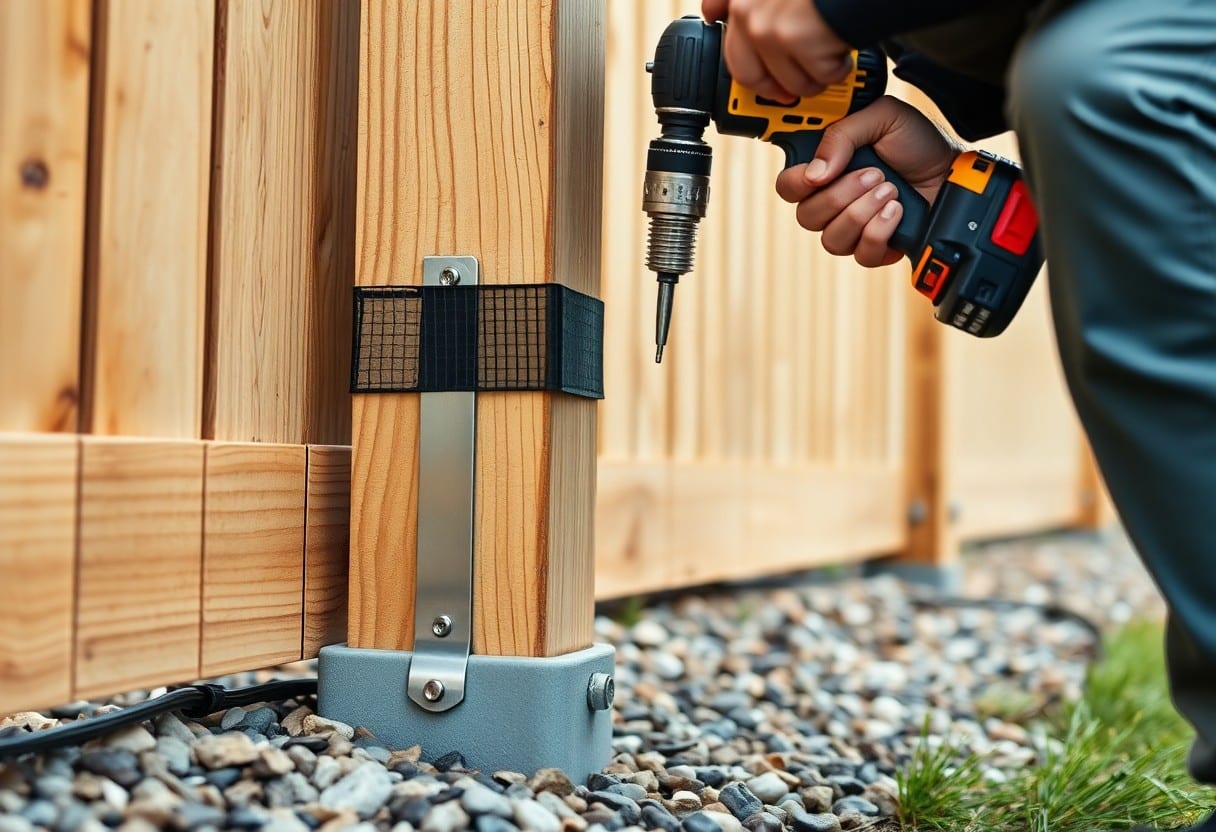
A post can look “fine” above the grass and still be hollow at grade. We look for fungal staining, insect galleries, and a ring of soil that has pulled away from the concrete. Metal posts tell on themselves with rust scale at the collar and racked racking at the brackets.
On wood privacy fences, you will often see the lean on the neighbor-facing side because that is where wind load and wetter soil meet. On ornamental metal, the lean is easier to spot at corners and at gate jambs. Either way, take photos in daylight from the end of the run. A straight-on photo hides the problem; an end-view shows it.
Leaning fence repair options that actually last
Good leaning fence repair matches the repair to the failure:
- Reset the post. Dig out the failed hole, set a new post (or the same post if the wood is still sound above grade), plumb it, and pour a proper concrete footing. This is the standard fix when one or two posts have rotated.
- Sister or replace the post. If the post is rotten at the bottom but the rails are still true, a new post beside or in place of the old one carries the load. Cutting a rotten post off at grade and leaving the stub in concrete is a stall, not a repair.
- Rebuild a section. When three or more consecutive posts have moved, or rails are twisted, replacing that span is cleaner than a zipper of patches.
- Correct drainage. If water sits along the line, the next post will fail the same way. We talk about grade, downspouts, and leaving a small gap at the bottom of wood fences so splash-back does not stay wet.
Broader fence repair visits can also include pickets, caps, and gates in the same trip so you are not paying mobilization twice. Local repair context for Allen-area homes is also covered in our Allen fence repair guide if you want neighborhood-level examples of post and panel failures.
Clay soil, water, and post depth
Expansive clay is not a mystery. Texas A&M AgriLife Extension documents how these soils swell and shrink with moisture, which is exactly what loosens shallow footings. Posts need enough depth and a wide enough concrete mass to resist that movement and the wind load of a solid privacy wall. A hole that is barely bigger than the post, filled with dry mix dumped in a puddle, will not hold a Texas summer.
We also watch for irrigation that soaks one side of a post all season. Drip lines and rotor heads along a fence look tidy until the collar is sitting in mud. Moving a head two feet can do more for the next decade than another bag of concrete on a wet post.
If you are planning a new line instead of a patch, start with fence installation so post spacing, material, and gate layout are designed together. Repairing a lean on a fence that was under-built is postponing the same conversation.
What not to try with a bottle jack
Homeowners sometimes jack a post upright, kick dirt back in, and hope. That can split rails, pop pickets, and leave the post in the same weak hole. Temporary braces are fine for safety after a storm; they are not a repair. Pushing a rotten post until it snaps can drop a whole panel into a play set or AC unit.
If the fence is on a property line, talk with the neighbor before digging. Access, shared cost, and matching materials matter more than a weekend of guesswork. We will tell you honestly when a reset is enough and when you are better off quoting a section replacement.
Ready for a site visit? Call (469) 972-6744. We will plumb the line, check post condition at grade, and give you a written scope for leaning fence repair—or a rebuild if that is the only durable option.
FAQ
Can you straighten a leaning fence without replacing posts?
Only if the posts are still sound and the lean is from loose soil or a failed collar. Rotten or snapped posts need replacement. Straightening without a new footing usually means the lean returns.
How many leaning posts before I should replace the whole fence?
There is no magic number. If the rails, pickets, and remaining posts are healthy, we replace the failures and rebuild only the weak spans. If stain has failed, rails are soft, and the lean is everywhere, a full replacement is often cheaper over five years.
Will a leaning fence keep getting worse?
Yes. Once a post rotates, wind and gravity work it further. Gates get worse first because they concentrate load on two posts.
How long does leaning fence repair take?
A couple of isolated posts can be a short visit. A long run with new concrete needs cure time before we hang heavy gates. We set expectations on site after we see soil and access.