
Protection starts with selecting rot-resistant materials, raising posts, applying water-repellent sealant, ensuring good drainage, and performing seasonal inspections so you can prevent moisture damage and extend your fence’s life.
Selecting Rot-Resistant Materials
Choose materials with proven decay resistance like pressure-treated lumber, cedar, or composite boards to limit moisture absorption and extend fence lifespan.
Pressure-Treated Wood Standards
Check for AWPA or EPA treatment labels so you know whether the wood is rated for ground contact, structural use, or above-ground applications.
Naturally Durable Wood Species
Select cedar, redwood, or cypress for their natural oils and resins that resist decay, reducing maintenance and replacement frequency.
Cedar and redwood contain tannins and natural preservatives that slow rot, but heartwood quality and exposure matter; you should seal end grains, choose vertical boards for better drainage, and inspect fasteners to avoid moisture traps that shorten service life.
Applying Protective Surface Treatments
Apply protective coatings to exposed fence surfaces before winter and after cleaning; they block moisture, reduce swelling and slow decay. Ensure you cover end grains and edges fully, and follow manufacturer instructions for drying and recoat times to maintain a durable shield against damp conditions.
High-Performance Waterproof Sealants
Choose high-performance waterproof sealants like polyurethane or silane-siloxane blends to create a water-repellent barrier; you should apply thin, even coats and allow full cure before exposure. Reapply per product guidance, especially on horizontal rails and post tops where water pools.
Preservative Stains and Wood Oils
Treat with preservative stains or tung and linseed oils to penetrate fibers and inhibit fungal growth; you should thin oils for initial coats on dense woods and recoat annually or biannually depending on exposure.
You can choose oilborne preservatives for deep penetration or waterborne preservative stains for quicker drying; test on a hidden board to check color and absorption. Prepare wood by cleaning and allowing it to dry thoroughly, then brush or spray evenly, paying special attention to end grains and fastener holes. Recoating every 12-24 months keeps protection active, and sanding before retreatment improves adhesion and finish uniformity.
Strategic Installation and Ground Clearance
Position posts so fence boards sit several inches above ground, letting air and runoff keep you from prolonged moisture exposure and wood rot.
Avoiding Direct Soil-to-Wood Contact
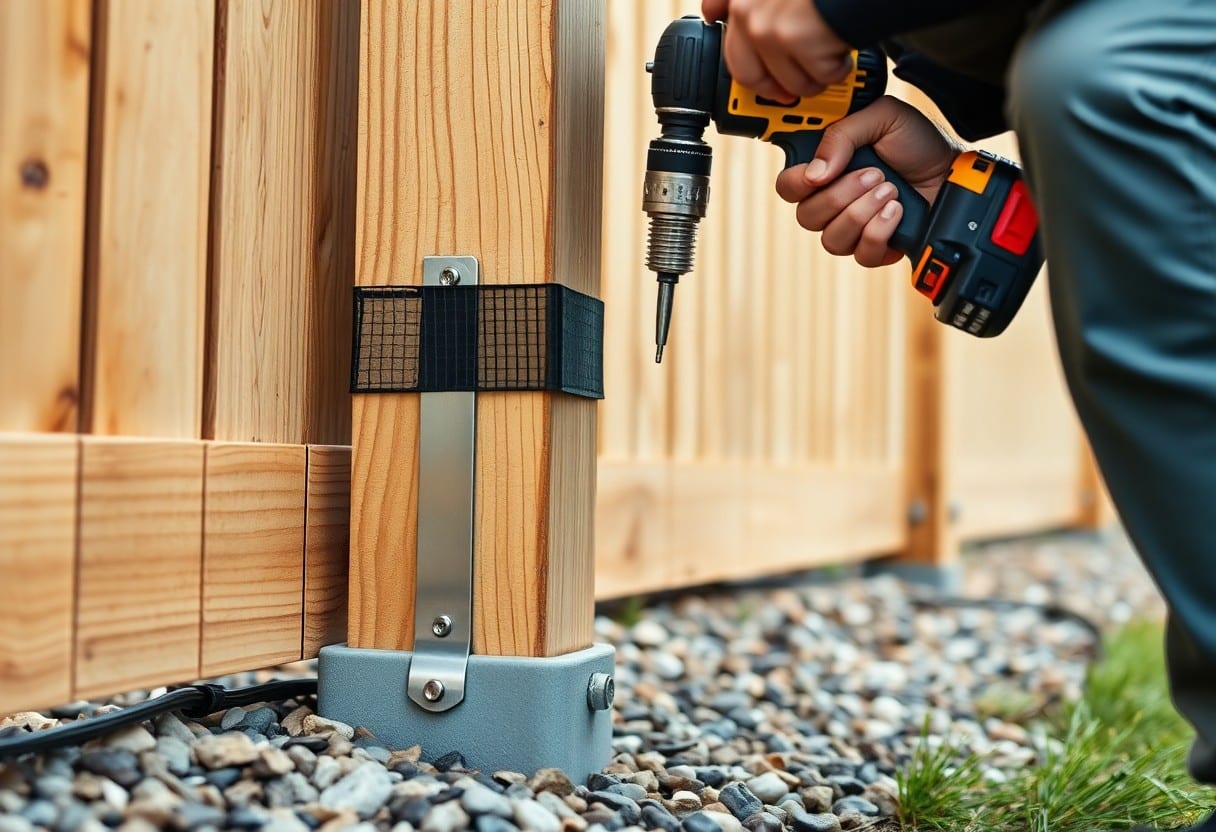
Keep wooden elements off soil by using galvanized post anchors or metal saddles so you avoid continuous wetting and decay.
Utilizing Concrete Footings and Gravel Bases
Set posts on concrete footings with a gravel collar to promote drainage, reduce capillary moisture, and extend your fence’s service life.
Concrete footings isolate posts from saturated soil and raise the timber above the frost line. You should form a compacted gravel collar around each footing to channel water away and interrupt capillary rise. Properly sealed post pockets and correct footing depth let you minimize movement and slow rot, increasing long-term durability.
Implementing Effective Drainage Solutions
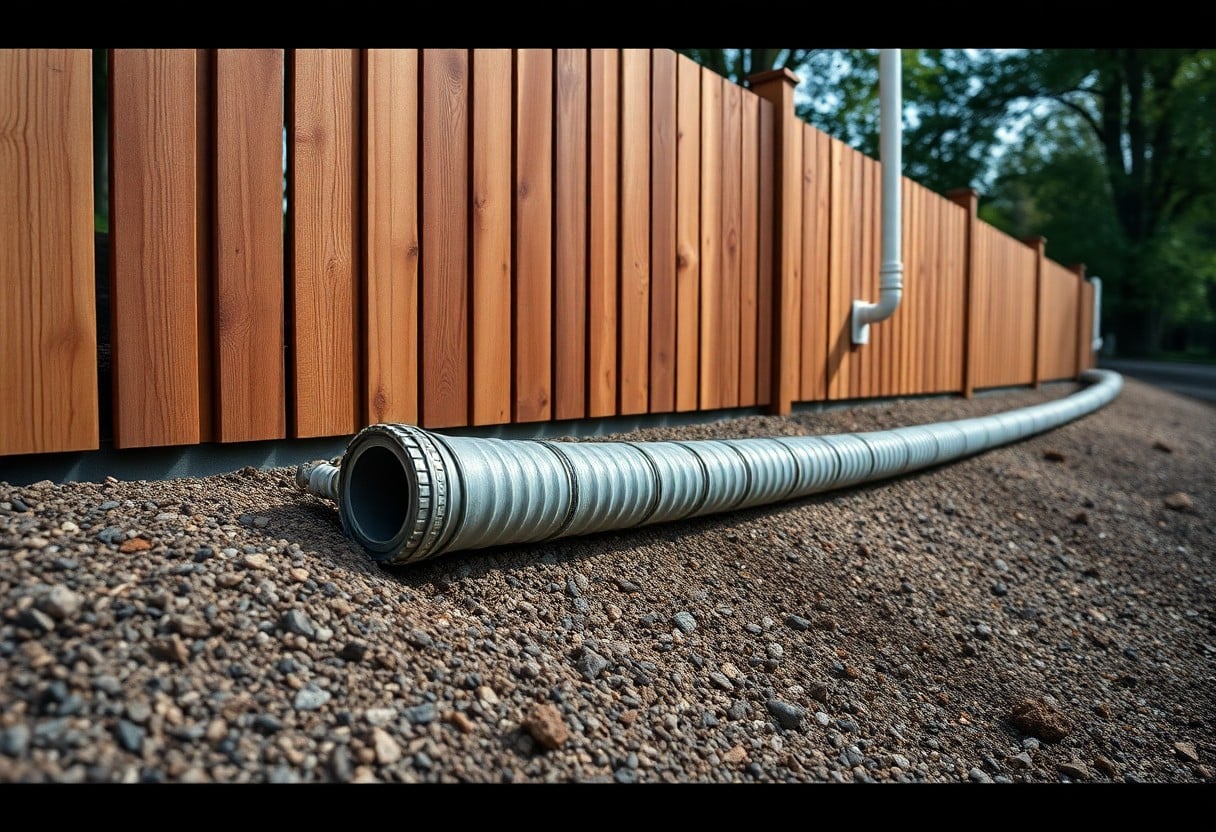
Implementing effective site drainage helps you prevent water pooling at fence posts; direct downspouts away, install French drains or gravel trenches, and keep soil settled to reduce prolonged moisture exposure that triggers rot.
Soil Grading for Water Runoff
Slope the ground away from fence posts about one inch per foot so water runs off; you can add soil to low spots and compact gently so the grade holds and standing water is avoided.
Managing Vegetation and Debris Accumulation
Clear vegetation and leaf litter at the base of the fence to improve airflow and stop damp pockets; you should keep climbing plants and mulch several inches away from wood.
Inspect around posts monthly; prune vines back, pull weeds that trap moisture, remove mulch touching boards, and replace composting soil near the base with gravel or crushed stone so you maintain a consistently dry zone.
Protecting Vulnerable Structural Points
Your fence’s joints and post bases are most exposed to moisture; raise posts slightly on gravel or concrete pads, slope surrounding soil away, and apply preservative to cut ends to limit rot.
Installation of Post Caps for End-Grain Protection
Install metal or plastic post caps to seal end grain; you should choose breathable designs that avoid trapping moisture and reapply sealer under caps annually.
Use of Non-Corrosive Hardware and Fasteners
Select stainless steel or hot-dip galvanized bolts and screws so you avoid rust stains and metal-driven rot; coat fastener holes with preservative before driving.
Choose long-life stainless alloys (316 for coastal sites) or hot-dip galvanizing for inland fences; you should favor through-bolts with washers at high-load connections and use neoprene or stainless washers to isolate wood from metal. Pre-drill holes, apply preservative to exposed threads, and inspect yearly to replace any corroding hardware promptly.
Long-Term Maintenance Protocols
Establish a predictable inspection and upkeep routine that checks sealant integrity, post bases, and drainage paths so you catch moisture issues early and preserve wood life for years.
Scheduled Re-sealing and Cleaning Cycles
Follow a seasonal schedule: clean with a mild detergent, remove mildew, then re-seal every one to three years depending on exposure so you maintain barrier protection and limit moisture absorption.
Early Detection and Remediation of Moisture Damage
Inspect your fence monthly for soft spots, discoloration, or loose boards; treat affected areas immediately to stop spread and replace severely rotted pieces to prevent structural failure.
When you find softened or darkened wood, probe with a screwdriver and check moisture with a meter; cut out decay, apply a borate preservative to exposed wood, allow drying, then patch or replace sections and improve drainage or add gravel at post bases to reduce repeat moisture exposure.
Final Words
Now you protect your fence from rot and moisture by using rot-resistant or pressure-treated wood, applying a water-repellent stain or paint, ensuring post drainage with gravel and caps, keeping soil and vegetation away, and re-sealing every few years while using stainless fasteners.
FAQ
Q: What fence materials resist rot and moisture best?
A: Pressure-treated lumber, cedar, and redwood resist decay because chemical treatment or natural oils protect the fibers. Composite boards and vinyl do not rot and require less ongoing moisture protection, though fasteners and posts can still corrode or settle. Galvanized or stainless steel hardware extends life in wet conditions. Choose materials based on budget, appearance, and how much maintenance you want to perform.
Q: How should I install posts and boards to minimize ground moisture contact?
A: Set posts on compacted gravel and concrete footings with the top of the concrete finished above surrounding soil to shed water. Use metal post anchors or concrete collars to keep wood off direct soil contact when possible. Dig drainage-friendly holes, backfill with gravel beneath the post base, and slope the surrounding grade away from the post to prevent pooling. Position the bottom rail and pickets so there is a few inches of clearance above grade to reduce splash-back.
Q: What coatings and treatments prevent rot, and how often should I apply them?
A: Apply a water-repellent preservative or high-quality exterior stain with UV protection within a few weeks of installation for new wood that is dry. Solid-color stains and exterior paint provide more barrier protection than clear sealers but require proper surface prep. Reapply water-repellent treatments every 1-3 years, and recoat paint or stain every 3-7 years depending on exposure and product instructions. Seal end grains and cut edges immediately after cutting to slow moisture absorption.
Q: What routine maintenance reduces the chance of rot and moisture damage?
A: Inspect the fence annually for soft wood, loose boards, rusting hardware, and areas where soil or mulch contacts wood. Trim back vegetation and vines that hold moisture against boards. Clean mold and mildew with a mild bleach solution or oxygen bleach, rinse thoroughly, and allow the wood to dry before resealing. Tighten or replace corroded fasteners and replace any damaged boards or posts promptly to prevent spread of decay.
Q: How do I repair existing rot or treat moisture-damaged sections?
A: Remove all soft, rotted wood and cut back to sound, dry material. Replace compromised posts and rails when structural strength is lost. For small localized decay, use a borate treatment to kill fungi and a wood epoxy or consolidant to restore shape before sealing. Improve drainage and ventilation around the repaired area to prevent recurrence. If multiple posts are rotten at ground level, plan on section replacement rather than patching to restore long-term integrity.