
After a squall line or a straight-line wind event, the first look at the backyard is often a panel on the grass or a gate that no longer latches. Storm-damaged fence repair is about triaging safely: what is a hazard tonight, what can be reset, and what has actually failed at the posts.
My Texas Fence walks these jobs once the weather clears. If you need a crew on site, call (469) 972-6744 or request a visit. This guide covers the inspection order we use, how wind actually breaks a fence, and how to decide repair versus replace without guessing from the street.
Table of contents
- Safety and a first-pass inspection
- How wind and flying debris damage fences
- Reading the damage on posts and panels
- Storm-damaged fence repair versus replacement
- Photos, insurance, and HOA notes
- Reducing the next storm’s impact
- FAQ
Safety and a first-pass inspection
Do not climb a leaning run to “push it back.” Treat a fence like a wall that may still be under load. Keep kids and pets away from any section that moves. Watch for nails, splintered rails, and metal caps on the lawn. If a panel is resting on an AC condenser, meter, or play structure, stabilize it with a temporary brace or have us do that before anyone mows.
Walk the entire perimeter, not just the obvious gap. Storms often twist a corner post and leave the “pretty” side standing until the next gust. Photograph every span, both faces, and close-ups of broken posts at the soil line. Those photos help a written estimate and, if you file a claim, show the difference between old rot and new breaks.
National Weather Service offices in North Texas publish local wind reports after severe weather; they are useful context, not a substitute for looking at your posts. See the Fort Worth office at the NWS Fort Worth site if you want official event summaries.
How wind and flying debris damage fences
Solid privacy fences catch wind the way a billboard does. Pressure builds on one face; the posts take the moment at the ground. If a post was already loose from clay-soil heave, the storm finishes the job. Open styles such as spaced pickets or ornamental metal let more air through, which is why they often survive with bent pickets instead of a collapsed run. We cover material choices for windy lots in this wind-focused fencing guide.
Debris is the other villain: trampolines, trash cans, and tree limbs. A limb can shatter a rail while leaving posts plumb. That is a good repair candidate. A trampoline that took out four posts in a row is usually a section rebuild. Gates fail at hinges and at the latch post because they are the moving, heavier piece.
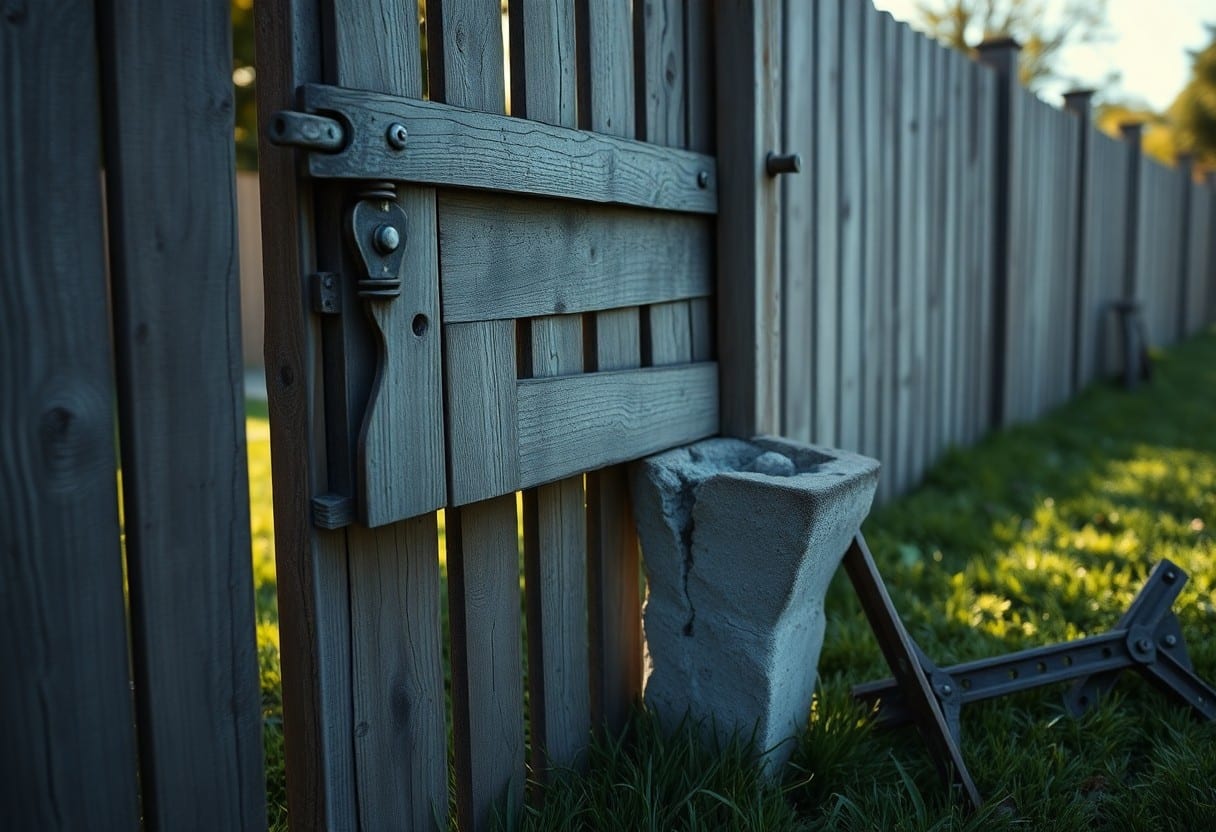
Reading the damage on posts and panels
Sort what you see into four buckets:
- Clean breaks in pickets or rails from impact — usually replace those members and reuse posts.
- Racked panels that are still fastened but diamond-shaped — posts may have rotated; resetting posts is the real repair.
- Posts snapped at grade — new posts, new concrete, then rehang. This is classic storm-damaged fence repair.
- Old rot revealed by the storm — the wind did not create the soft wood; it advertised it. Budget for more than the one panel on the ground.
Hardware tells the truth. Shiny, stretched hinge screws and a twisted latch mean the gate took a hit. Rusted, empty screw holes mean the gate was already walking off the post. We will say so in the scope so you are not surprised.
If only pickets exploded, picket replacement can close the hole quickly. If the gate will not swing, start with gate repair and rebuild in the same visit when the hinge post is still sound.
Storm-damaged fence repair versus replacement
Repair is the right call when posts are plumb and solid, damage is localized, and matching boards or metal are still available. Replacement is the right call when the storm exposed a fence that was already at the end of its life: widespread lean, rotten rails, failing stain, and mixed patches from prior years.
A practical sequence we use:
- Make the yard safe and recover salvageable panels if the style is still made.
- Plumb and reset or replace failed posts.
- Rebuild only the spans that cannot be true’d.
- Rehang gates last, after concrete has set enough to take the load.
Trying to reuse every broken panel “to save money” can leave a zipper of new and crushed wood that fails in the next front. We would rather rebuild a clean 16- or 24-foot section. For the bigger decision of keeping the whole fence, use when a fence needs to be replaced alongside this storm checklist. Ongoing fence repair after storms is also how we catch the second-wave leans that show up a week later when soil is still saturated.
Photos, insurance, and HOA notes
We do not file claims for you and we do not promise what a carrier will pay. We can provide a dated estimate that separates storm-related breaks from pre-existing rot if those are visibly different. Keep your own photo set from the morning after, plus any HOA architectural rules if a rebuild will change height, color, or material. Matching the existing fence is usually the fastest HOA path; a style change may need another approval.
If a tree from a neighbor’s yard caused the impact, document the tree and the fence before cleanup. That is a property conversation, not something a fence crew can settle.
Reducing the next storm’s impact
No fence is a storm bunker. You can still improve the odds: proper post depth and concrete, not blocking every inch of airflow unless you need full privacy, keeping trampolines tied down, and trimming limbs that already scrape the top rail. After a repair, stain or finish new wood on the schedule the material needs so the next wet season does not start rot at the same joints.
If you are rebuilding a long run, talk through material while the crew is already on site. Wood, ornamental metal, and aluminum behave differently in wind. The goal is a fence you will not be photographing in the yard after every spring front.
Want a walk-through once the weather breaks? Call (469) 972-6744. We will separate hazards, salvage, and true storm-damaged fence repair from sections that should come out completely.
FAQ
Should I brace a leaning fence until a crew arrives?
A simple brace that keeps a panel off people and equipment is reasonable. Do not jack posts back to plumb and rebury them. That hides the failure and can split rails.
Can you match old wood after a storm?
Often, if the profile is still produced. Weathered boards will not color-match new ones until stain or time catches up. We will show you mix-versus-replace options on site.
How soon should storm-damaged fence repair happen?
As soon as it is safe to work. Open lots, pets, and unsecured panels are the urgency—not a calendar. Saturated soil can also make post setting messier, so we plan the footing work around access and weather.
Will the rest of the fence fail in the next storm?
If posts were already loose, yes, more of the run can go. That is why we inspect beyond the obvious gap instead of hanging one new panel on tired posts.